


From Gorillas to the Clouds: Mount Karisimbi

December 2016
After sleeping atop an active volcano, I thought I’d already felt Africa’s pulse. But dawn in Rwanda has a way of humbling you. The light doesn’t rise — it seeps through the mist, slow and spectral, revealing shapes that feel older than memory. Today, I would climb Mount Karisimbi, the tallest of the Virunga volcanoes, a 4,507‑meter giant wrapped in cloud, snow, and silence. Nyiragongo is loud, fiery, theatrical. Karisimbi is the opposite. It waits. It watches. It tests you quietly.

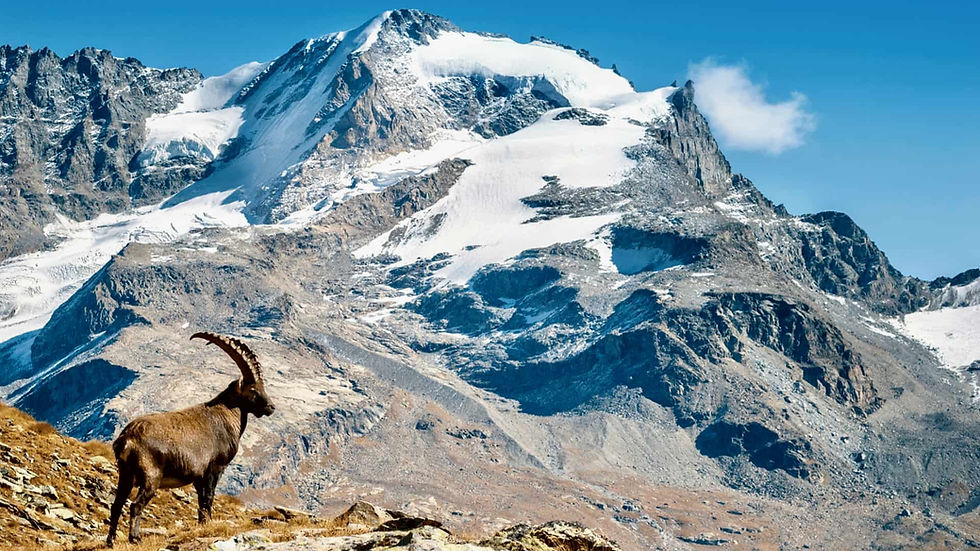
Mount Karisimbi is not just a mountain; it’s a dormant stratovolcano, the tallest of the eight Virunga volcanoes. Its slopes rise in long, sweeping arcs, carved by ancient lava flows and sculpted by centuries of rain, wind, and cloud. From a distance, Karisimbi looks like a sleeping giant wrapped in mist — but up close, its volcanic bones are unmistakable.
The summit crater is vast and weather‑beaten, a reminder that this mountain was once a furnace of molten rock. Today, it sleeps, but the land around it still trembles with the memory of fire. Karisimbi is part of the Albertine Rift, one of the most geologically active regions on Earth, where the African continent is slowly tearing itself apart. This is a volcano shaped by time, silence, and altitude — not by recent eruptions, but by the slow, patient work of nature.
Eruption History - A Giant in Hibernation
Karisimbi last erupted in the Holocene, thousands of years ago. No human alive has ever seen it erupt, and no written records describe its fire. But the evidence is everywhere:
deep gullies carved by ancient lava
volcanic ash layers beneath the forest
the crater rim fractured by old explosions
fertile soils that feed the dense Virunga jungle
Unlike Nyiragongo, which roars and spits fire, Karisimbi’s story is one of long silence. But dormant does not mean dead. The entire Virunga chain is alive beneath the surface — magma chambers, tectonic tension, and geothermal heat still shape the land.
Climbing Karisimbi is walking across a volcano that has simply chosen to wait.
Cultural Significance - The Mountain of Milk
To the people of Rwanda, Uganda, and the DRC, the Virunga volcanoes are more than geological features — they are ancestral guardians. Karisimbi’s name comes from the Kinyarwanda word “amasimbi”, meaning snow or white shell, a reference to the seasonal frost that crowns its summit.
In local folklore, the volcanoes are living beings:
Karisimbi is the wise elder, calm and towering.
Nyiragongo is the hot‑tempered warrior.
Bisoke is the lake‑keeper, holding water in its crater.
For centuries, communities have looked to these peaks for guidance, protection, and identity. Even today, Rwandans speak of the mountains with a mixture of reverence and pride. The gorillas that live on Karisimbi’s slopes are woven into this cultural fabric — symbols of resilience, family, and the fragile balance between humans and nature. Climbing Karisimbi is not just a physical journey. It’s a passage through a landscape shaped by myth, memory, and meaning.
The Approach - Where the Forest Breathes

The trail begins in a cathedral of green. Towering hagenia trees, moss hanging like ancient tapestries, bamboo groves whispering in the wind. The air is thick with moisture — every breath feels like drinking the forest. But beauty here is never gentle.
Mud grabs your boots like it wants to keep them. Roots coil across the trail like sleeping serpents. The ground shifts, sinks, and slides beneath you.
Our guides moved with the confidence of men who know this mountain intimately. Machetes flashed in the dim light, slicing through vines and overgrowth. Behind us and ahead of us, armed rangers walked in silence — a reminder that this borderland is wild in more ways than one.
Encountering the Mountain Gorillas
We found them — a family of Mountain Gorillas resting in a small clearing carved naturally into the jungle. A majestic female lounged in the foliage with the calm confidence of an animal that has never needed to justify her place in the world. Infants tumbled over her arms, clumsy and curious, their soft grunts and playful squeaks drifting through the mist. And nearby, half‑hidden behind a curtain of vines, the silverback watched us. His gaze was steady, assessing, ancient. Not aggressive — simply aware. A reminder that in this forest, we are the visitors. I lowered my head, crouched, and made myself small, a gesture of respect that felt instinctive rather than learned.

The moment stretched into something surreal. Unlike the controlled gorilla trekking experiences — where distances are measured, time is regulated, and rangers choreograph every movement — this encounter was raw and unfiltered. There were no boundaries here except the ones the gorillas themselves chose to enforce. Every shift of weight, every breath, every rustle of fabric mattered. The forest felt like a cathedral, and the gorillas its quiet congregation.
Mountain Gorillas are among the rarest primates on Earth, survivors of a lineage that once stretched across the continent. By the 1980s, they were nearly gone — fewer than 300 remained, threatened by poaching, habitat loss, and conflict. Their future was a coin toss. But the people of Rwanda, Uganda, and the DRC fought for them. Rangers risked their lives. Communities embraced conservation. Today, their numbers have slowly climbed above 1,000. Still fragile. Still endangered. But alive — defiantly, beautifully alive.
Watching them, you understand why their recovery matters. Mountain Gorillas are profoundly social beings. Families are built around the silverback, who leads not through violence but through presence — a calm, steady authority. Females raise infants with tenderness that feels almost human. Adolescents wrestle, explore, test boundaries. They communicate through chest beats, grunts, hums, and glances. Every gesture has meaning. Every sound is part of a language older than our species.
And there are rules — unspoken, but absolute. You don’t stare directly into a silverback’s eyes. You don’t stand tall. You don’t make sudden movements. You keep your voice low, your posture soft, your intentions clear. You let them decide the distance. You let them decide the moment. Respect is not optional here; it is the only currency that matters.
As the infants played, the silverback shifted his weight, exhaled a deep rumble, and the forest seemed to vibrate with it. Not a warning — simply a reminder of who he was. A king without a crown, a guardian of a lineage that has survived war, disease, and the slow tightening grip of human expansion. Their future still hangs in the balance. Climate change, population pressure, and political instability remain constant threats. But seeing them here — thriving, relaxed, utterly at home — fills you with a strange, quiet hope.
In that misty clearing, surrounded by ancient trees and the soft chorus of the forest, I felt the weight of the Virunga ecosystem. This place is more than volcanic energy and dramatic landscapes. It is a sanctuary for some of the planet’s most precious life. A reminder that wilderness is not just scenery — it is a living, breathing world that continues to exist only because people choose to protect it.
And for a few minutes, we were allowed to share that world. Not as conquerors. Not as tourists. But as humble witnesses to something rare, fragile, and profoundly alive.
The Borderland - Soldiers in the Trees
Karisimbi is beautiful, but it is not isolated from history. The Virunga region has seen conflict, displacement, and instability for decades. The Rwandan side is secure, but the proximity to the DRC means every expedition is accompanied by soldiers and armed park rangers. They move like ghosts through the trees. No bravado. No noise. Just presence. Their job is simple: make sure you return.
It’s one of the only climbs in the world where you can hear gorillas in one direction and distant military patrols in the other. The contrast is surreal — a reminder that these mountains hold stories far older and far harsher than your own.
High Camp - Where the Jungle Ends and the Sky Begins
By late afternoon, the forest thinned. Giant lobelias rose from the mist like alien sculptures. The temperature dropped fast — the kind of cold that bites through layers and settles into your bones.
Karisimbi High Camp sits around 3,700 meters, perched on the edge of the moorland. The wind never stops. Tents flap like sails. Clouds race overhead, swallowing and revealing the landscape in seconds. Night fell early. The mountain exhaled. And everything went quiet.
Summit Push
At 2 a.m., we stepped into darkness, our headlamps carving thin tunnels through the fog as the trail rose sharply into volcanic rubble slick with frost. The world felt reduced to the small circles of light in front of our feet, everything else swallowed by cloud and silence.
By 4,200 meters, a thin, ghostly layer of snow appeared—snow on the equator, on a volcano—glowing faintly under our beams. The wind roared across the ridge, tearing at jackets, numbing fingers, and stealing breath. Every step grew heavier and more deliberate, the altitude pressing down like an invisible hand.
Then, through the swirling cloud, the summit antenna emerged: a skeletal silhouette rising from the crater rim, stark and surreal against the storm. At 4,507 meters, I touched the highest point in Rwanda, a quiet moment of triumph in a place that felt suspended between earth and sky.
Inside the summit cabin, snow drifted through the cracks and the wind screamed outside, but the tea was warm, and in that fragile shelter, the simplicity of the moment felt perfect.
Practical Tips for Climbing Karisimbi
Prepare for mud — serious mud The lower slopes are some of the muddiest trails in East Africa. Waterproof boots and gaiters are essential.
Expect cold, rain, fog, and wind Karisimbi creates its own weather. Bring real layers.
Altitude matters The summit is 4,507 m. Move slowly and hydrate constantly.
Armed rangers are mandatory This is a borderland climb. Their presence is essential.
Gorilla encounters are possible Stay calm, stay low, and follow ranger instructions.
The summit cabin is extremely basic Expect wind, cold, and a roof that rattles like a ship in a storm.
Bring gloves, a hat, and a proper jacket Yes, it’s equatorial Africa. Yes, you will freeze without them.
How to get there
Climbing Karisimbi begins long before the jungle swallows you. The mountain sits on the border of Rwanda and the Democratic Republic of Congo, inside the greater Virunga ecosystem. The Rwandan side is secure and well‑managed, but the proximity to the DRC means every expedition is tightly controlled.
Fly Into Kigali, Rwanda
Kigali International Airport is the safest and most efficient entry point. Rwanda is organized, clean, and easy to navigate — a stark contrast to the wildness of the Virunga Mountains.
Travel to Musanze (Ruhengeri)
A 2–3 hour drive north brings you to Musanze, the base town for all Rwandan‑side Virunga climbs.
Good hotels
Reliable outfitters
Close to Volcanoes National Park HQ
This is where permits are checked and ranger teams are assigned.
Permits & Official Requirements
Karisimbi requires:
a special climbing permit
registered park guides
armed rangers (mandatory due to border proximity)
advance booking through Rwanda Development Board or licensed operators
You cannot climb Karisimbi independently.
Best Season to Climb Mount Karisimbi
Karisimbi can be climbed year‑round, but the mountain’s altitude and rainforest environment mean weather plays a huge role in your experience.
June – September (Long Dry Season)
The best time to climb.
Reduced mud (but still muddy)
Clearer summit conditions
Less rain in the forest
Cold, crisp mornings
This is the most reliable window for visibility and safety.
December – February (Short Dry Season)
Also a strong option.
Good trail conditions
Less rainfall
Stable summit weather
Expect cold nights at high camp.
March – May (Long Rains) — Not Recommended
Deep mud on lower slopes
Heavy rain in the forest
Slippery volcanic rock
Clouded summit
Higher risk of storms
This season turns Karisimbi into a mud‑soaked endurance test.
October – November (Short Rains)
Climbable, but challenging.
Frequent showers
Fog and low visibility
Wet, cold summit conditions
Only recommended for experienced trekkers who don’t mind harsh weather.
Descent - And What the Mountain Leaves With You

Descending Karisimbi is a battle with mud, gravity, and fatigue. But it also gives you time to think. About the gorillas. About the soldiers. About the jungle that feels alive. About the snowstorm on an equatorial volcano. About the quiet power of a mountain that doesn’t need fire to be formidable.
Karisimbi doesn’t dazzle you with spectacle. It humbles you with endurance.
It teaches patience. It demands respect. It rewards those who move slowly, listen carefully, and accept that some mountains speak in whispers, not flames.
Height (5/10) At about 4,507 m, it is high enough to cause mild altitude effects but not extreme oxygen deprivation like the tallest global peaks.
Technical Difficulty (3/10) It is a trekking climb with no ropes or technical mountaineering required, though steep and slippery sections can make it physically demanding.
Terrain & Route Complexity (6/10) The route passes through dense rainforest, bamboo zones, and volcanic slopes, making it long, muddy, and physically tiring even if not technically complex.
Weather & Climate (6/10) Conditions range from hot, humid jungle at the base to cold, wet, and foggy conditions near the summit, often with heavy rainfall and poor visibility.
Accessibility & Remoteness (7/10) Access is limited by its location in the Virunga region, requiring permits, guided trekking, and travel through remote and sometimes restricted areas.
Final overall difficulty rating: 5.4 / 10
Mount Karisimbi is moderately difficult mainly due to long jungle approaches, wet terrain, and remoteness, not technical climbing or extreme altitude.



Comments